How HCA Healthcare prepared for the 2026 FIFA World Cup
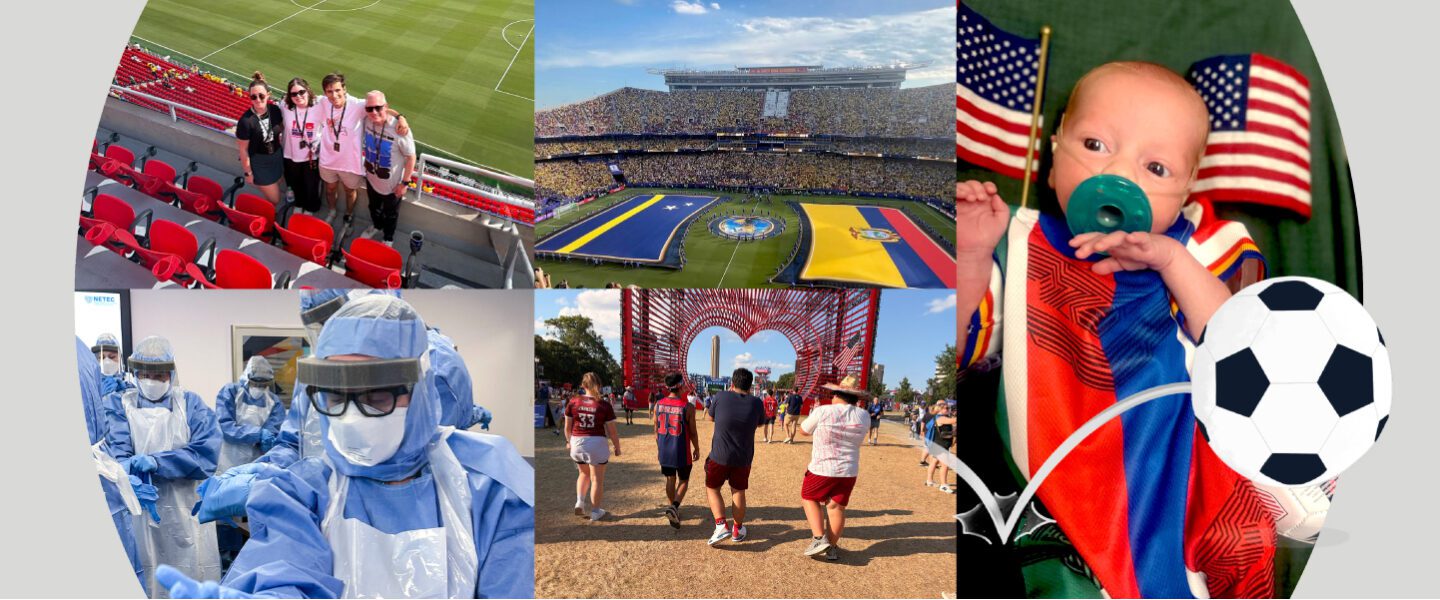
Earlier this summer, the international FIFA World Cup games put the United States on the global stage. The five-week-long event brought teams from across 48 countries — and fans from even more — to 11 different cities for a series of 104 games. With several million fans having traveled to the country, it marked the largest sporting event in the nation’s history.
Until this year, the United States had never hosted a sporting event as widespread and long lasting as the FIFA World Cup. In late 2025, the federal government projected anywhere between 5 and 7 million international visitors would travel within and beyond game areas for as long as eight weeks of the summer; it was expected visitors would add extracurricular travel to their itineraries before and after the games. As hotels, rental car companies and airlines prepared for the surge in visitors, so too did hospitals.
Any influx of patients can put tremendous pressure on hospitals. “You have 2 million visitors in north Texas in an eight-week window. You likely have more car accidents, baby deliveries, heart attacks, strokes and sniffles,” says Jacob Johnson, assistant vice president for EMS relations and emergency preparedness at Medical City Healthcare, HCA Healthcare’s North Texas division. The hospitals needed to be ready with staff, supplies, translation services and a game plan in the instance of more serious scenarios.
With a nationwide network and diversity of expertise, HCA Healthcare is uniquely positioned for an event of the FIFA World Cup’s scale. Six of the 11 host cities happened to be in HCA Healthcare communities (Los Angeles, San Francisco, Dallas, Houston, Kansas City and Miami), where a total of 43 games occurred between June 11 and July 19.
“The scale of HCA Healthcare’s response capability is one of our greatest strengths,” Johnson says. “With more than 190 hospitals and deep clinical expertise across emergency care, trauma, cardiac care, infectious disease and more, we can help meet the demands of a global event while protecting access to care for our local communities.” This means that even though the games were localized to six HCA Healthcare communities, those teams could access staff and resources from around the country to support them throughout the events.
Facility leaders in those areas spent up to two years coordinating plans for the FIFA World Cup. This included off- and on-site trainings, regional and hospital exercises, regular enterprisewide briefings and collaborating with their fellow divisions to improve as a whole.
Just as every good coach knows, training and practice help a team perform its best on game day. The same goes for our players at HCA Healthcare. By preparing and implementing our offensive and defensive strategies, all six divisions welcomed this summer’s FIFA World Cup head on.

1. Translation Services
With millions of international visitors traveling to the country, hospitals needed to prepare for non-English-speaking patients. HCA Healthcare partnered with AMN Healthcare to connect each hospital branch with remote interpreters who could translate symptoms and diagnoses between physicians and patients in more than a dozen different languages, from Dutch to Japanese to Russian.
The services went deeper than spoken language. Remote interpreters paid special attention to tone and meaning to ensure information was communicated compassionately and accurately between patients and providers. They also helped our clinicians understand cultural distinctions, especially around matters of health, so that staff could provide the best care for each individual. For example, it’s not uncommon for patients from some cultures to downplay symptoms of discomfort and pain, whereas others don’t shy away from detailing how they feel.
Interpreter services also helped physicians better understand the customs and preferences of international patients. Their expertise revealed, for example, that patients from Brazil respond well to warm, personable interactions, while patients from Japan and Saudi Arabia expect more formal, polite communication.

2. Staffing
As our divisions prepared for the influx of FIFA World Cup visitors, ensuring hospital branches had plenty of staff was top of mind.
Staffing plans required thoughtful coordination among hospital locations, match schedules and fan festival activity. “You leverage the local intel, along with the population migration forecasts, and try to predict where the greatest demand on hospital staffing will be,” says Hanes. “Then, you put your resources where they are needed the most.”
For local colleagues, the planning also created opportunities to pick up extra shifts if they chose to do so. They also looked beyond the division to the greater HCA Healthcare system.
Our Enterprise Response Teams (ERTs) are comprised of around 200 colleagues who can be deployed anywhere in the country where there is a need. Each team is trained in various capabilities: Clinical teams, including emergency physicians and NICU staff, behavioral health and therapy dogs, engineers for infrastructural or IT issues, and even leaders who can be deployed to hospitals during prolonged emergencies to give the local facility leaders a break.
“We have facilities coast to coast, East to West, and we use a team-of-teams approach to surge expertise and assistance when it is needed,” says Melissa Harvey, RN, BSN, MSPH, the assistant vice president of HCA Healthcare’s Emergency Management Division.
By acting as HCA Healthcare’s eyes and ears, they’re prepared to deliver on-the-ground support in every circumstance.

3. Off-Site Services
Not every play happens within the hospital. Our teams went out into the community to provide on-site support at the games. In the height of summer, this included safety measures against the heat.
In Dallas, for example, Medical City Healthcare had cooling stations outside of Dallas Stadium (generally known as AT&T Stadium) with water, and staff members on hand to identify potential heat stroke and call EMS.
And in Miami, HCA Healthcare set up a tent at the fan festival (a lively, outdoor gathering of soccer fans, often with live entertainment and alcohol) to treat small injuries or heat-related illnesses. Not only did this bring on-the-ground care to the community, it also offered an alternative site for care that helped avoid overwhelming the emergency room.

4. Community Preparedness
Beyond medical professionals, HCA Healthcare found ways to get the community involved ahead of the FIFA World Cup games. They held training courses for CPR and STOP THE BLEED® certification so that non-medical professionals could comfortably assist people while waiting for first responders to arrive.
Hospitals also bulked up their blood banks ahead of the games with more blood drives. “Two million people coming to town has an impact on blood supply,” Johnson says. “We hosted 28 blood drives during June and July to support critical blood supply demands and to encourage our communities to help save lives when it matters most.”

5. Infectious Diseases and Decontamination
While the FIFA World Cup is meant to be all fun and games, a large influx of international visitors does increase potential exposure to certain viruses and diseases. Harvey points to the 2024 case when an Iowa patient contracted Lassa fever during a trip to West Africa. In the time it took to get a correct diagnosis, the patient went to six different healthcare facilities, coming into contact with 172 healthcare workers in the process.
Harvey emphasizes the critical nature of quickly identifying a patient who presents with signs and symptoms of disease or infection, beginning with the first person who interacts with them in the emergency room.
As part of HCA Healthcare’s Infection Prevention Train the Trainer Program, nursing leaders, infection preventionists, emergency managers and clinical educators from divisions in FIFA World Cup areas traveled to Nashville for in-person education and training. “We taught our teams how to rapidly identify a patient with a potential disease or virus, isolate them in an appropriate room to ensure the safety of our patients and visitors, and how to don PPE to keep our caregivers safe,” Harvey says. These individuals returned to their home communities as trainers for staffers at their local hospitals.
A similar program also helped hospitals prepare for potential instances of contamination, if, for example, a group of people came into contact with hazardous materials, such as chemical or radiological substances, at a game, hotel room or fan festival. The Decontamination Train the Trainer program is held annually and brings emergency managers, ED clinicians, safety and security colleagues, and plant operations staff across the enterprise to Nashville for training.
6. Public Figures
HCA Healthcare divisions had to have a plan should a soccer player, politician or even foreign dignitary come to the emergency room during the FIFA World Cup.
Medical City Healthcare, for example, hosted advance visits from security teams ahead of the games.
Whether for athletes, state officials or other public figures, maintaining privacy and respect is always paramount. The safety and security of all our patients remains front and center during high-profile events.
7. Security
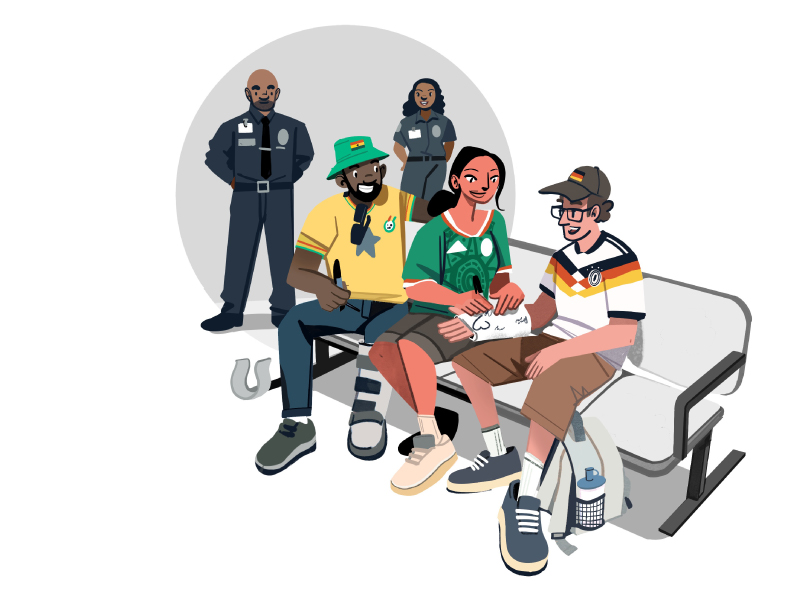
As one of the most globally played sports, soccer goes hand in hand with national pride. Soccer fans are known for their unwavering loyalty, an emotion often heightened on game day, and some nations share historic rivalries that can create tension at games or fan festivals. Part of HCA Healthcare’s preparation for the games began with basic FIFA World Cup education, including soccer fan behavior and potentially aggressive fans prone to physical altercations with those from rival teams.
In addition, an international event can potentially come with geopolitical tension.
HCA Healthcare helped lead security efforts in the game communities to keep people and communities safe. “We established operational task forces to prepare for risks that have the potential to impact communities,” Harvey says.
HCA Healthcare leveraged its Risk Information and Intelligence Center (RIIC) – an enterprisewide 24/7 all-hazards situational awareness and
intelligence capability — and developed a dedicated Intelligence Sharing Hub for the FIFA World Cup to facilitate real-time information exchange across divisions and communities, enabling a coordinated, systemwide response to emerging issues.
Additionally, the enterprise served as part of a state, local, international and private sector collaboration group, directly communicating potential risks and threats with health departments and emergency management agencies throughout the country. “If there was a major emergency, we were able to immediately connect with local, state, and federal agencies to take the burden off the hospitals so that they could focus on the event itself,” Harvey says. “We wanted our colleagues to enjoy the [FIFA World Cup]. It’s a time to celebrate sports and our national pride.”
8. High Acuity Surges
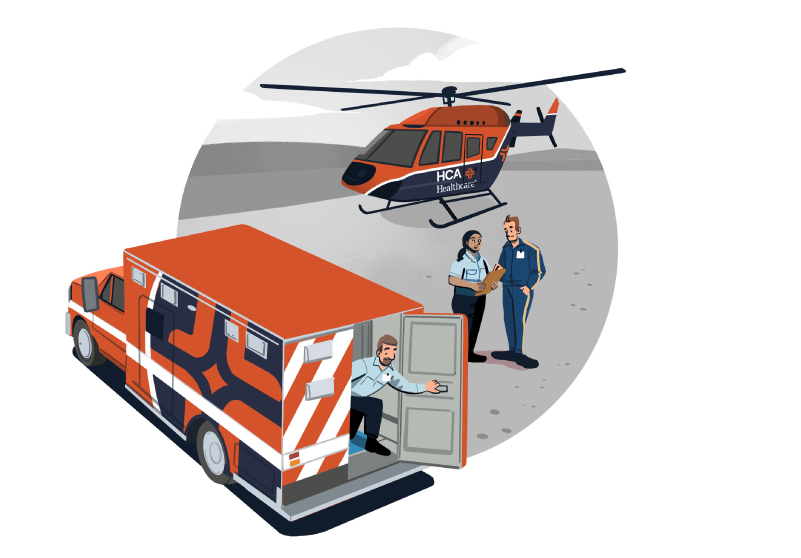
Part of HCA Healthcare’s preparations for risks and threats during the FIFA World Cup included developing hospital-specific divisions and enterprisewide plans in the instance of a mass casualty event or “high acuity surge,” which means a large number of patients need treatment at once.
Trainers from the Enterprise Emergency Management team went to each of HCA Healthcare’s divisions, including all FIFA World Cup communities, to run through different scenarios, from how to triage and provide treatment for a large number of patients at a time, to connecting patients involved in a mass casualty event with their loved ones.
In instances of high-acuity surges, hospitals also needed to be prepared to quickly and safely relocate incoming and current patients to nearby hospitals, a practice known as decompression. Divisions worked with other local hospital systems to determine different ways they could distribute patients throughout the community for the greatest overall outcomes.
9. Artificial Scenario Drills
On April 8, 2026, the enterprise simulated artificial scenarios across all six FIFA World Cup communities. These training sessions ranged from a stampede and mass casualty event in Houston to a bad batch of illegal drugs distributed at a fan festival in Miami, resulting in a surge of patients who needed medical attention.
Some hospitals even experienced communications/IT downtime, which serves as a reminder that more routine challenges still occur even when everyone’s attention is on the FIFA World Cup. All scenarios were different so that each division could learn from the others’ experiences.
10. Enterprisewide Elevation
The planning, strategies and practices implemented ahead of the FIFA World Cup didn’t end after the final game on July 19. These initiatives are well underway across all of HCA Healthcare’s divisions and will be standard by 2027. It’s part of HCA Healthcare’s continued effort to elevate care and emergency response strategies to a world-class level — the ultimate win.
PRIORITIZING SAFETY INSIDE AND OUTSIDE OUR WALLS
Large-scale events are not the only time HCA Healthcare turns its attention to safety and security. On a day-to-day basis, we value a respectful healthcare environment for our care teams, patients and visitors.
Preventing workplace violence is one of our most vital responsibilities. HCA Healthcare is committed to working with divisions and facilities to support our safety policy, practices, processes and technologies to help reduce incidents of workplace violence.
The enterprise Workplace Violence Taskforce has identified six workgroups to help foster a culture where colleagues feel protected, respected and empowered — allowing them to focus on what they do best — taking care of patients.
- Workplace Violence Standards: Standardizing facility taskforce expectations to strengthen workplace violence prevention and response practices
- Safety Resources and Technology: Evaluating and providing safety measures to identify and respond to risks
- Clinical Triggers: Identifying high-risk patients based on clinical assessments and history, and alerting staff accordingly
- Staff Competencies: Educating on recognizing aggression signs and de-escalation techniques
- Data and Reporting: Providing a standardized reporting platform to capture event reporting and track program effectiveness
- Post-Event Response: Establishing the best practices for post-event debriefing, reporting and colleague support