Digital Exclusives

Cracking the Code on Sickle Cell

November 11, 2026

Yomi Ajeneye was only 28 years old when she started to recognize how dire her situation had become.

“I already tried so many things — all the medications, infusions, anything I could try — and I just knew that this was my last option before this disease ended my life,” says Yomi, a Nashville native and an information governance analyst in HCA Healthcare’s Digital Transformation & Innovation department.

Diagnosed with sickle cell disease shortly after birth, Yomi began showing symptoms at age 9. By 2022, the disease had accelerated into what she describes as a domino effect: chronic daily pain, a gallbladder removal, acute chest syndrome, pneumonia and constant hospitalization.

Fortunately for Yomi, TriStar Centennial Children’s Hospital in Nashville was rewriting outcomes for sickle cell patients through an innovative gene-modification therapy.

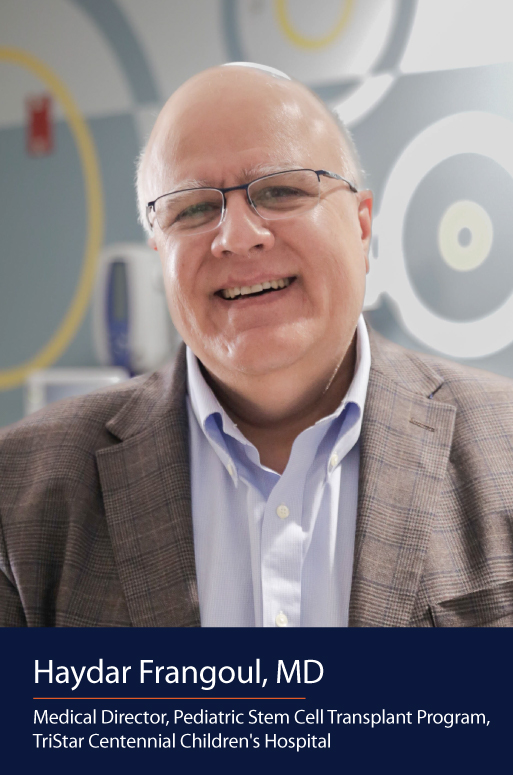
CRISPR, short for “clustered regularly interspaced short palindromic repeats,” modifies DNA at a specific location in a cell to induce the production of fetal hemoglobin. “That will basically make the disease symptoms go away in people with sickle cell disease,” says Haydar Frangoul, MD, director of the Stem Cell Transplant Program at TriStar Centennial.

Yomi was treated as an adult, given that sickle cell gene-editing trials began with only adult patients. With a track record of remarkable successes, this year the FDA extended approval to patients as young as 2 years old. Yomi’s recovery is the proof of concept that made that expansion possible.
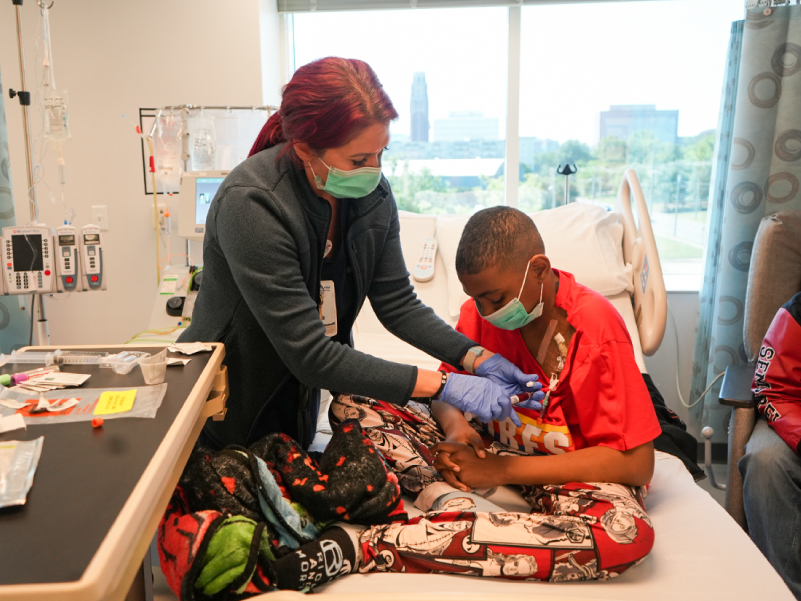
A Cure for the 80%

Sickle cell disease afflicts roughly 100,000 people in the United States and is particularly prevalent in the African American community, affecting 1 in 365 births.

“The older the patient, the more damage to the organs,” says Dr. Frangoul. “It is a debilitating disorder that causes multiorgan dysfunction. The damage is cumulative over time.”

For decades, the only cure was a bone marrow transplant from a fully matched family donor — an option unavailable to most patients. “Only 18% to 20% of patients have an available donor,” Dr. Frangoul says.

In 2018, Dr. Frangoul presented a different option to his 33-year-old patient, Victoria Gray. Through a clinical trial, Dr. Frangoul could harvest Victoria’s own stem cells, modify them and return them to her bloodstream using CRISPR.

In 2019, Dr. Frangoul’s team performed the world’s first CRISPR gene-editing procedure on Victoria at TriStar Centennial. The results, published in The New England Journal of Medicine in 2021, changed the trajectory of the disease for patients who had run out of options.

“That was truly the seminal work we did initially because all these trials happened in adults [like Victoria] before they happened in children,” Dr. Frangoul says. “We really did open a crack in the door, and now it’s wide open.”

The results were dramatic enough that the FDA approved the commercial use of CRISPR for adults in 2021. Two years later, the FDA expanded approval to patients 12 and older. By 2026, children as young as 2 were eligible.

“People with sickle cell disease have waited for a long, long time to get options for a cure,” Dr. Frangoul says. “I tell my patients that help is on the way, and now there is a potential cure for them.”

People with sickle cell disease have waited for a long, long time to get options for a cure. I tell my patients that help is on the way, and now there is a potential cure for them.

— Haydar Frangoul, MD, director of the Stem Cell Transplant Program at TriStar Centennial Children’s Hospital, Nashville

Why Early Treatment Matters

That expansion to younger patients is a race against the disease’s own timeline. Because sickle cell damages organs cumulatively, the sooner treatment begins, the more damage can be prevented.

“When a child is diagnosed with sickle cell disease, it’s a devastating disease. Manifestations happen in the first few years of life,” Dr. Frangoul says. “The more pain crises that individuals or children with sickle cell disease have, the more organ damage they’re having over time. We have many families and parents come to us saying, ‘I want to treat my child early before they get irreversible damage to an organ.’”

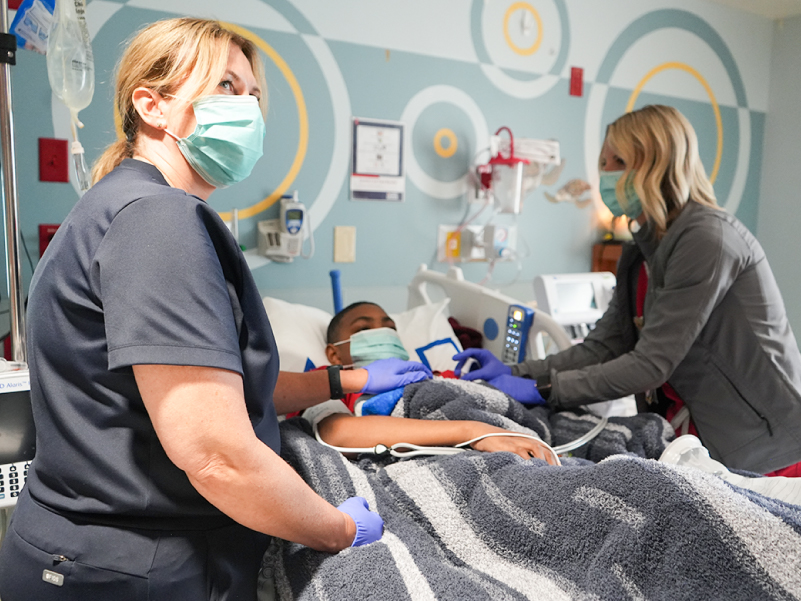
According to Dr. Frangoul, all the patients they treated who were younger than 12 had no symptoms of the disease after treatment. “They are back to school, doing well, living like normal children,” Dr. Frangoul says. “I’m of the mindset that treating early is very helpful because it will potentially prevent complications that possibly cannot be reversed, even if we did this therapy at an older age.”

Dr. Frangoul credits HCA Healthcare as being “very instrumental” in bringing the therapy to this point. “HCA Healthcare is the location and the partner that has allowed us to do all this work here that got national attention,” he says. “These clinical trials have attracted patients from more than 28 states to our center to receive this therapy.”

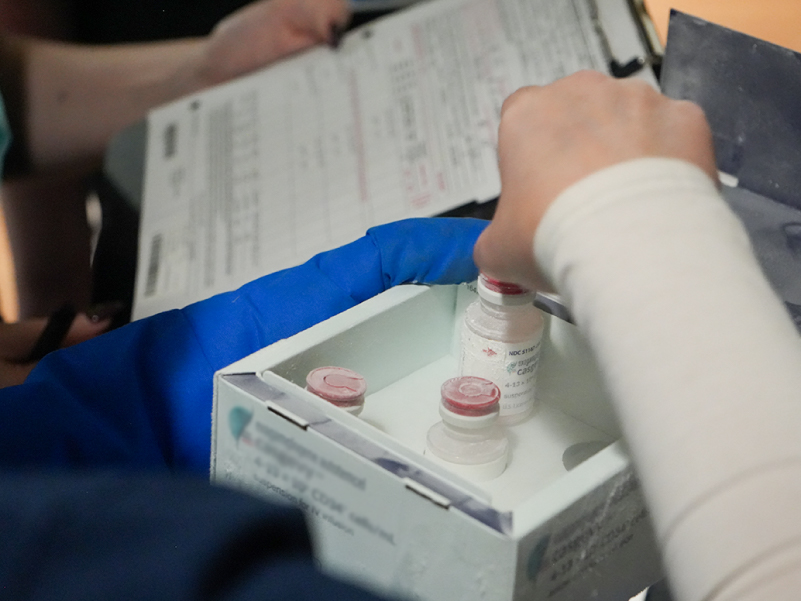
The technology’s reach is expanding beyond sickle cell, too. Dr. Frangoul’s team recently used the same CRISPR approach to treat chronic granulomatous disease, or CGD, a condition that leaves patients vulnerable to life-threatening infections. “We were able to use the same technology using CRISPR, and we’ve already cured two patients,” he says.

The therapy is currently offered at both TriStar Centennial Children’s Hospital and Methodist Children’s Hospital in San Antonio. Soon, it will launch at Medical City Children’s Hospital in Dallas. Dr. Frangoul expects exponential growth in the number of facilities offering the treatment, both within HCA Healthcare and beyond.


This past July, 13-year-old Rickey Buggs became the first FDA commercially approved CRISPR patient at TriStar Centennial. As of late summer, Dr. Frangoul’s team had infused 56 patients, with a dozen more patients anticipated by year’s end.

“I am humbled to be a very tiny part in making this happen, and I think it is absolutely groundbreaking,” Dr. Frangoul says. “This was the first step, so it’s basically like the first person landing on the moon.”

Making Every Day Count

Yomi Ajeneye’s path to recovery began when her father saw one of Yomi’s TriStar Centennial colleagues, Meghann McManus, MD, discussing the CRISPR trials on television. Yomi reached out to Dr. Frangoul’s team. Her parents and brother had already been tested as potential bone marrow donors and weren’t matches.

In early 2024, Dr. Frangoul offered Yomi the trial’s last available spot. For the first-generation American, whose parents emigrated from Nigeria, it was a new lease on life. She had stem cells collected across three sessions — on her 26th birthday and again that July and September — before the modified cells were reintroduced into her bloodstream on her 27th birthday, March 18, 2025.

“I’m now 17 months post-transplant and doing great,” Yomi says. “Physically, I felt a difference around my second month. My hemoglobin started getting higher and higher.”

Physical recovery came faster than mental, she says. Sickle cell patients develop coping mechanisms over years of illness that aren’t easily set aside. It’s part of why she’s hopeful for the toddlers now eligible for treatment under the FDA’s expanded approval.

“They’ll be able to play sports. They’ll be able to run around with their friends and focus on their education,” Yomi says. “Even better, they don’t have to worry their parents. My parents were constantly worried for more than 20 years.”

Today, she measures her recovery in ordinary things. “I haven’t taken any pain meds in over a year. I haven’t had to call out sick. I can go outside,” she says. Before treatment, Yomi wasn’t sure she’d see 30. Now she’s thinking about what comes after.

“I’m blessed. I’m grateful because not everybody can get this chance,” Yomi says. “There are a lot of people in life who are diagnosed with things at birth, or even things when they get older, who don’t get a second chance. They succumb to their condition. So the fact that I’m here — I have to make every day count.”