In emergency medicine, staff are familiar with the phrases “time is brain” and “time is muscle,” shorthand for the critical few minutes after a heart attack or stroke. Timely care interventions help prevent irreversible damage to the heart muscle and brain cells.
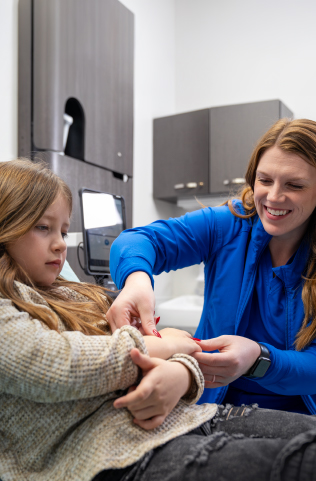

Unfortunately, sometimes getting to the emergency department can be a struggle. Whether it’s traffic congestion in a city or longer distances to travel in suburban or rural areas, the time it takes for an ambulance or loved one to drive to the emergency department eats into the life-saving minutes after a major health event.
As HCA Healthcare invests in growing its network of freestanding emergency rooms (FSERs), access to care is getting closer to home in many communities. “Our freestanding emergency rooms provide timely access to potentially life-saving care, offering patients a more convenient option when emergency treatment is needed,” says Jeffin Dejanovich, assistant vice president, emergency services. “It also provides family practices and urgent cares a place within the community to send those patients needing emergency care.”
Our freestanding emergency rooms provide timely access to potentially life-saving care, offering patients a more convenient option when emergency treatment is needed.— Jeffin Dejanovich, assistant vice president, Emergency Services
Leveraging the network for improved patient outcomes
An FSER is a self-contained facility located within 30 miles of the acute care hospital to which it is linked. With a nationwide network of 190 hospitals, HCA Healthcare has a lot of opportunities to build FSERs, helping further the reach of patient access points to the system’s high standards of care.
When deciding where to invest in a new FSER facility, three factors come into play, according to Brent Clark, vice president of Planning and Analytics.
• Demand. Financial and demographic analyses of communities around existing HCA Healthcare hospitals show where an FSER could provide benefit. It could mean opening a facility in a densely populated area to ease the caseload of an existing emergency department. Or a new FSER can bring access to care to a community where there’s a need for critical care, but not enough demand for a full-service hospital.
• Opportunity. Underserved areas around existing hospitals provide HCA Healthcare an opportunity to deliver quality service, filling in gaps of care.
• Real Estate Options. The availability of existing land plays a role in determining the specific location of a new FSER. Once demand and opportunity are determined, the team looks for available real estate within or as close to that area as possible.
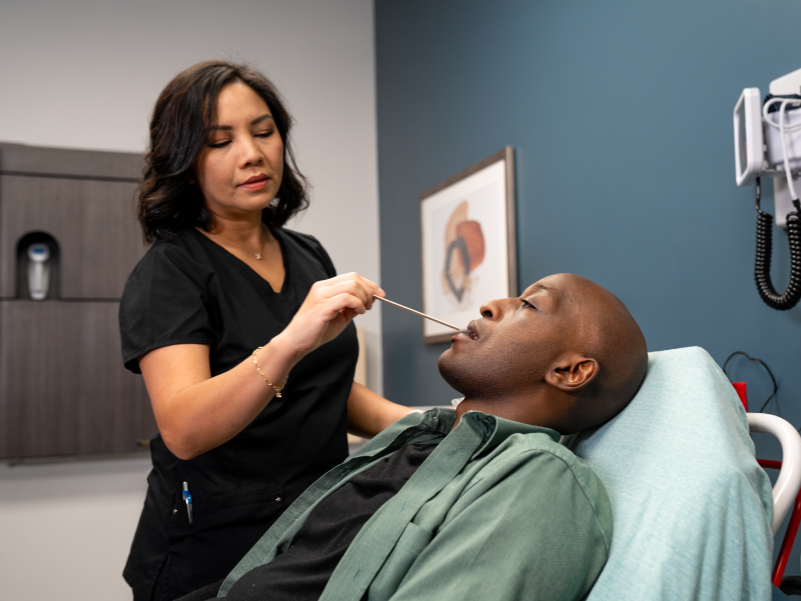
Expanding HCA Healthcare’s network also expedites the patient experience from the first point of care. “As soon as a patient steps into one of our FSERs, they’re automatically in our network,” Dejanovich says. “That’s a big benefit, as they can be connected to the resources they need after getting treatment or being stabilized, whether that’s surgery, admission or a follow-up visit after discharge.”
A growing model
HCA Healthcare is growing its FSERs as effectively as possible. “We are constantly looking for ways to invest in our communities, and FSERs provide the ability to match the need to the investment without overbuilding or underbuilding,” Clark says. “We can go into a community and provide a needed service where there is a demand.”
A streamlined approach to construction has helped fuel the growth of FSERs. Where a standard acute care hospital facility can take years to build, the timeline for an FSER, from design to completion, is just around one year. That’s due in part to the fact that the size and scope of an FSER allow for a standardized design. “While we tweak it as needed, we have a design in place so we’re not making a bunch of decisions from scratch with each new facility about locations of rooms, where equipment will be placed or even which equipment to purchase,” says Clint Russell, vice president, Design and Construction.
The strength of HCA Healthcare’s network doesn’t end when construction is complete. Thanks to years of working with the FSER model, the organization has created an operations guide to help each team as they open the facility and start caring for the community. “From a preopening checklist to guidance specifically for FSERs, the operations guide has valuable information to assist all of the teams involved in this critical work,” Dejanovich says.
The necessity of teamwork
A freestanding emergency room offers the same level of emergency evaluation, stabilization and treatment patients expect from an emergency department attached to an acute care hospital, with the added convenience of a community-based location. These facilities are designed to support a wide range of emergency medical needs, with experienced physicians, nurses and clinical teams working together to provide timely, coordinated care when minutes matter.
“Working in an FSER requires a high level of clinical expertise and operational excellence. It’s an environment that naturally fosters collaboration, where every team member is aligned and working together to deliver exceptional patient care.”
That sense of camaraderie found in the FSER is part of what attracted Ashley Gasser to the TriStar Mount Juliet ER in Mount Juliet, Tennessee. “When you know you can’t just go down the hall to get something, you have to rely on and trust each other, which makes us a really tight-knit work team,” Gasser says.
She also enjoys the autonomy that working in the FSER brings. “In this environment, you really use your critical thinking skills. And with this facility being nursing- and provider-based, we’re doing a lot of the patient care ourselves.”
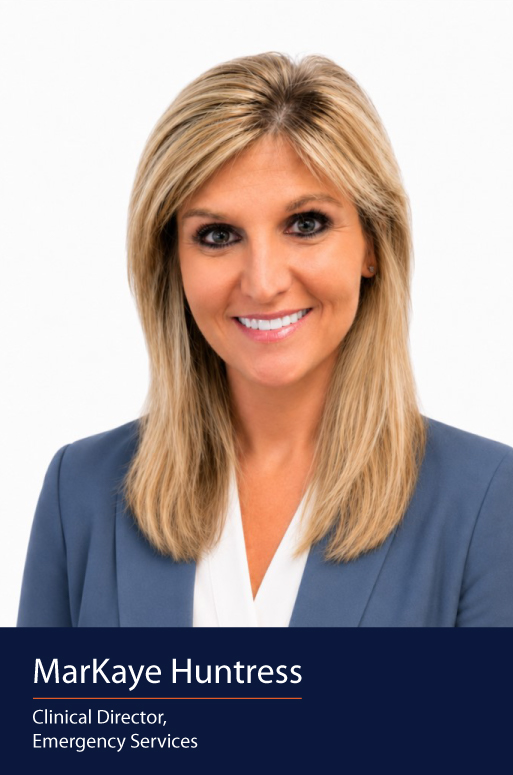
Working in an FSER requires a high level of clinical expertise and operational excellence. It’s an environment that naturally fosters collaboration, where every team member is aligned and working together to deliver exceptional patient care.”— MarKaye Huntress, clinical director, Emergency Services
The community connection
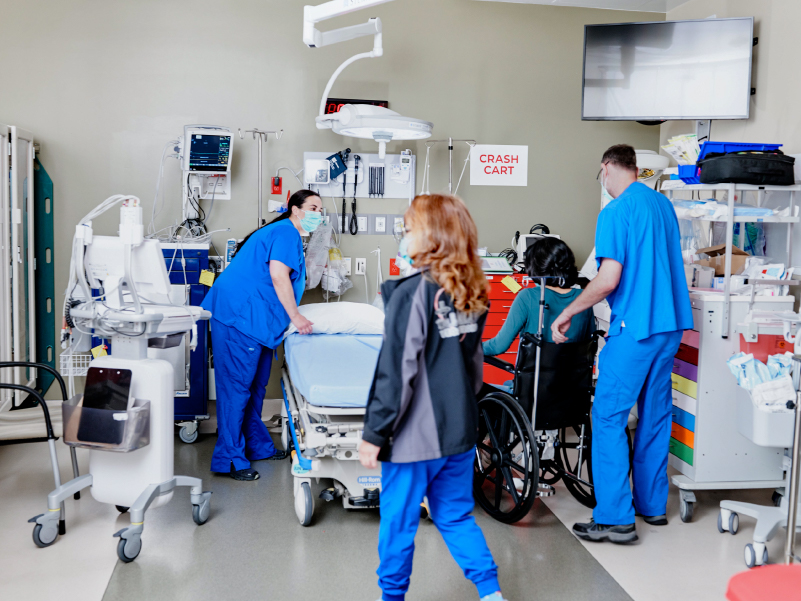
For Gasser, working at TriStar Mount Juliet ER feels like coming home. She grew up in this community, and now she gets to help care for the people in her hometown. Through her work, she has been able to see firsthand the benefit an FSER brings to a community.
“So many times, we hear that people won’t seek medical treatment because they don’t want to have to drive on the interstate, or they feel it’s just too far to the hospital,” Gasser says. “Having this facility provides the benefit of being able to seek out care closer to home, and in emergencies, minutes matter.”
The ability to access quality, efficient medical care close to home makes an impact on a community, one that can be felt by the patients who benefit from it. Gasser tells the story of a patient who came to TriStar Mount Juliet ER after suffering from a heart attack. Once stabilized, he was transferred to TriStar Summit Medical Center.
“In my previous work in emergency departments, we rarely ever found out what happened to a patient after they left our care,” Gasser says. In this case, three days after she and her colleagues transferred the patient, he stopped by on his way home to thank the team he credited for saving his life.
“His is not the only time we’ve experienced something like that, and I credit it to the community-building we do in this location,” Gasser says. “I’m truly blessed to be a part of this team and a part of our community, and I wouldn’t exchange anything for it.”
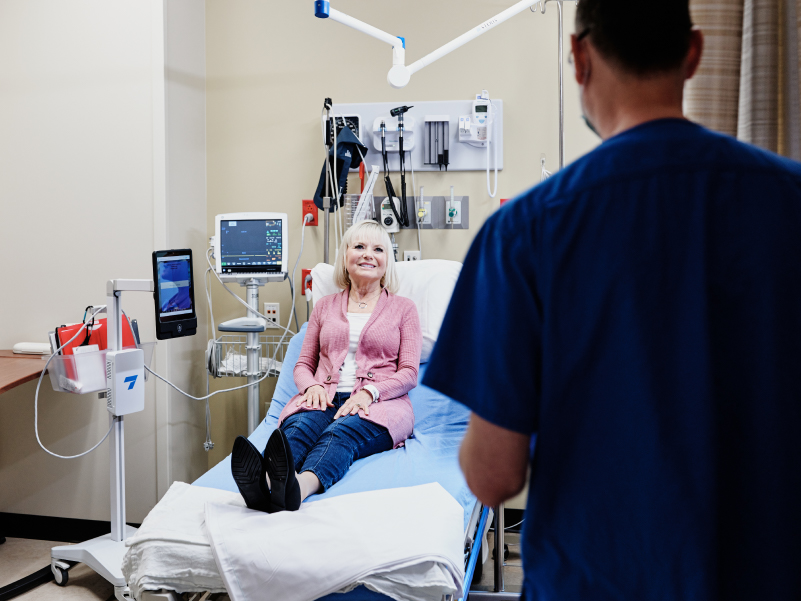
Each year, approximately 10 million patients come through an HCA Healthcare emergency room. Our freestanding ER footprint is enhancing access to emergency care by bringing it directly into communities, often where none existed before.