Veteran hospital chaplain embodies compassionate care in every interaction.
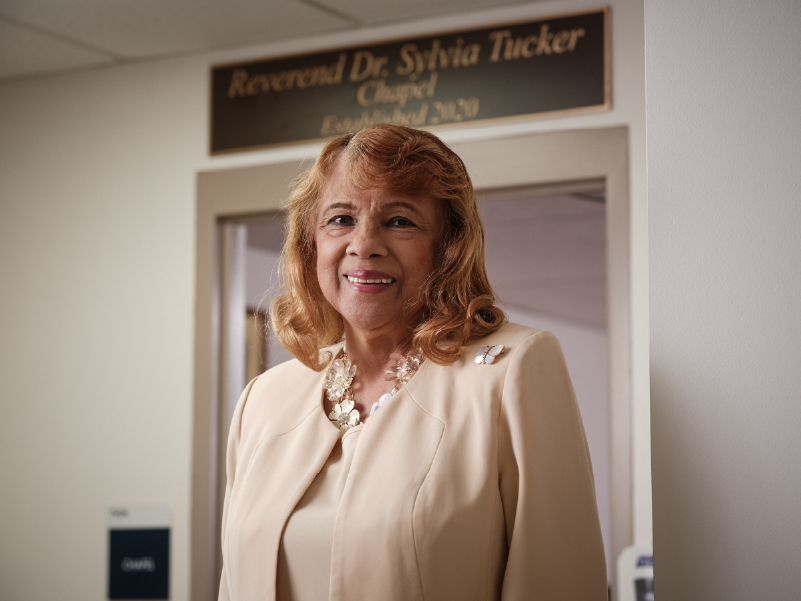
Four decades ago, when the Rev. Sylvia Tucker accepted the position of chaplain for what’s now TriCities Hospital in Hopewell, Virginia, she made history as the state’s first Black chaplain. A civil rights activist, Sylvia was too young to march with Martin Luther King, but she found mentors in Coretta Scott King and Rosa Parks. “Dr. King dreamed that one day, his children and others would not be judged by the color of their skin, but by the content of their character,” Sylvia says. “When I got this job, I thought one of those dreams had come true.”
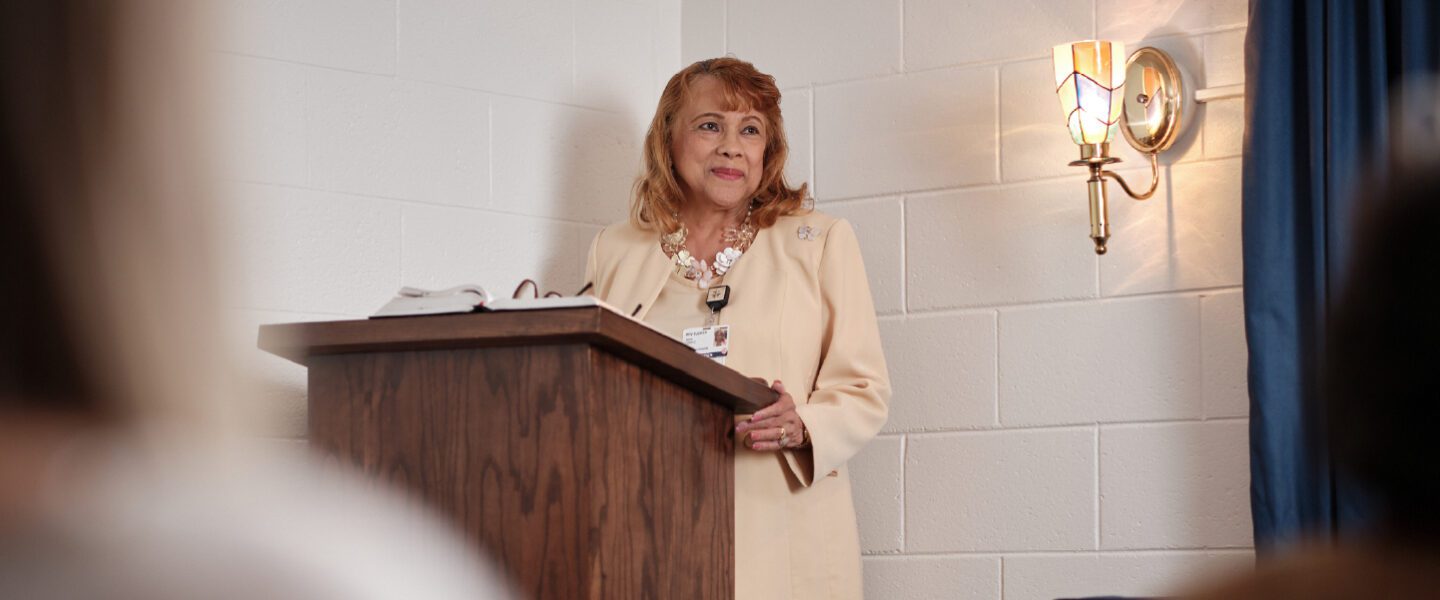
Today, Sylvia leads a team of 24 volunteer chaplains who join her in “making the rounds” — offering encouraging words, sharing a prayer or listening to patients who are looking for hope in a time of despair. We asked Sylvia what she finds most rewarding about her work, and why she believes in the healing power of lending an ear.
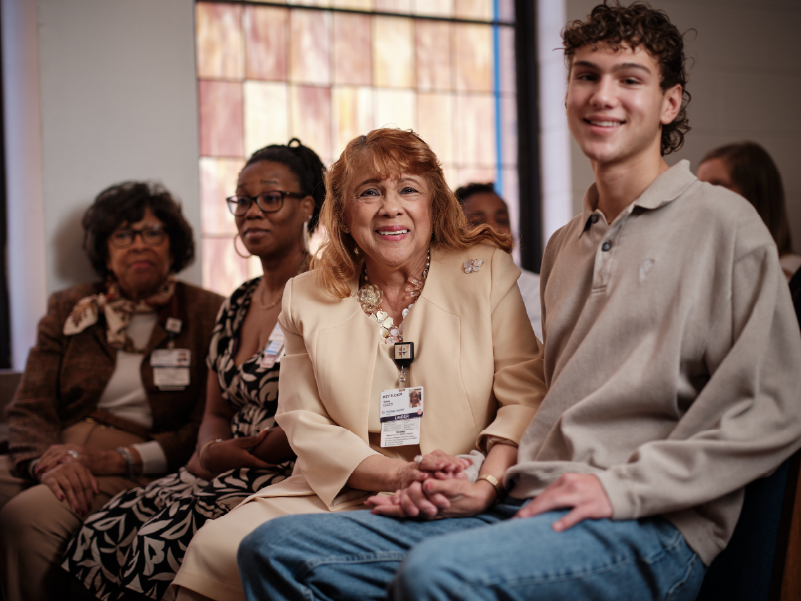
Q: What does it mean to be a chaplain?
A: Chaplains are non-denominational pastors. We don’t go into our patients’ rooms as Baptists, Methodists or Jehovah’s Witnesses, for example. It is our job to support and show love to every patient — whoever they are, whatever background, faith or race they come from. You love them, and you honor what they need because they are God’s people.
Q: How do you know what a patient needs?
A: I listen. I never go into a room saying, “I came to pray for you.” That is the patient’s choice. Sometimes a patient has no one and they need a friend. Some people haven’t seen or spoken to their family in years, and they need you to come in and listen to them. That is the most important quality as a chaplain. Even if you’re not a chaplain — whatever your walk of life — when you learn to listen before you speak, there’s so much you can gather.
Q: How are you able to help patients’ families?
A: When they are in a hospital, families need to know that their loved ones are safe and that the hospital is doing everything they can to give them good care — not just when the family is around, but when they have gone home. At TriCities Hospital, I believe every patient is getting the best care. When I say that this hospital has great, patient-centered leaders, I am saying it from my heart.
Q: What is the most important part of your job as a chaplain?
A: In the Bible’s book of Galatians, the “fruits of the spirit” are love, joy, peace, patience, kindness, goodness, faithfulness, gentleness and self-control. If you are a chaplain, you are set apart. You cannot be arrogant or mean just because someone is that way to you.
Q: Do you have any advice for visitors who want to comfort family or friends in the hospital?
A: When we are sick, it is one of the hardest times of our lives. You have to give up your independence by asking someone else to help you go to the bathroom or cut up your food. My advice would be to take a moment to reflect: “What if that were me? What if that was my loved one? How would I want them to be treated?” If you ask yourself that question, you will do all in your power to show compassion.
Q: What made you want to be a chaplain?
A: During my young days as a mother, my husband was in the military, and we spent a lot of time overseas. I became very sick, and the kindest people who made me feel like everything was going to be okay were chaplains. I always wanted to get my degree in theology and Christian education, but that’s what led me to become a chaplain.
Q: Do you extend care to hospital employees, too?
A: I think healthcare providers need the support to know they are working hard, and they are giving all they can give, and I think TriCities does a very good job of letting people know they are appreciated. On Thursdays and Fridays, I have a five-minute devotional period with a short message and prayer for staff.
Q: What’s most rewarding about your work?
A: When I go into a patient or family’s room and identify who I am, and the patient says, “Oh, thank you for coming,” my reply is, “Thank you for allowing me to come into your room and your space.” It is really rewarding when the patient asks me to talk with them or pray with them or read some scriptures and say some encouraging words. It is very beautiful.
Q: When you feel overwhelmed, how do you find the strength to offer encouragement to others?
A: I go to the chapel in the mornings to pray. I ask for guidance in whatever I say or do to treat patients and their families with love, joy, respect and dignity. Some situations, especially when they involve children, require all my strength. When I go to the chapel and pray, the presence of the Lord calms me down.
Q: How have things changed at TriCities Hospital over the past 41 years?
A: When I first came here, I understood there was a time when African Americans had to go to the basement to be served. Whites and others could come through the front door. In 1985, there were no African Americans in administration. I was here to witness the first Black CEO, and now, when I go downstairs to administration, I see diversity.
Through the years, I have seen so much I never thought I would see. Going back to my civil rights era, so many of my friends gave up their lives for all people to be treated fairly. I may have been the first Black chaplain, but I will not be the last. And that makes me very happy — every day.