HCA Healthcare Tackles Food Insecurity, One Community at a Time
Good nutrition starts long before a patient walks through the door. That’s the idea behind HCA Healthcare’s Healthy Food for Healthier Tomorrows initiative, a program that started as one division’s holiday food drive and has grown into an enterprise-wide effort to help address food insecurity in our communities.
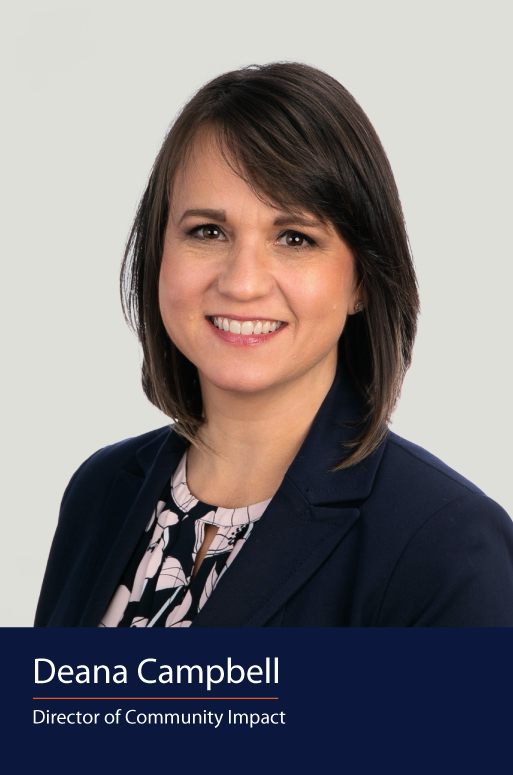
“Food is medicine, and access to nutritious food is an important social driver of health,” says Deana Campbell, director of Community Impact. “When people don’t have reliable access to healthy food, it can affect their physical health, mental well-being and ability to manage chronic disease.”
An Idea from Dallas Grows
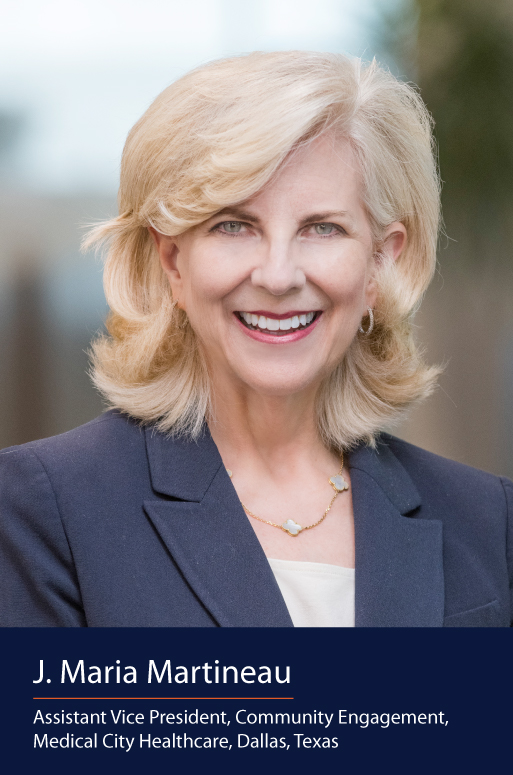
The first Healthy Food for Healthier Tomorrows Food and Nutrition Drive traces its roots to Thanksgiving, 2020. During the pandemic, J. Maria Martineau, assistant vice president of Community Engagement at Medical City Healthcare in Dallas, Texas, saw food banks and food pantries across the region experiencing a surge in demand. Colleagues across Dallas and north Texas responded. In the 10 days leading up to Thanksgiving, they collected thousands of pounds of food, while Medical City Healthcare provided $10,000 to support local food banks.
“It was so successful that we began discussing how to scale the effort enterprise-wide,” says Campbell.
A workgroup formed to learn from North Texas’ approach, with six of HCA Healthcare’s 15 divisions contributing input. In 2021, the first organization-wide food and nutrition drive launched.
Nine divisions participated that year, helping provide the equivalent of 370,000 meals through food contributions, colleague monetary gifts and HCA Healthcare Foundation grants to local food banks.
Creativity with a Purpose
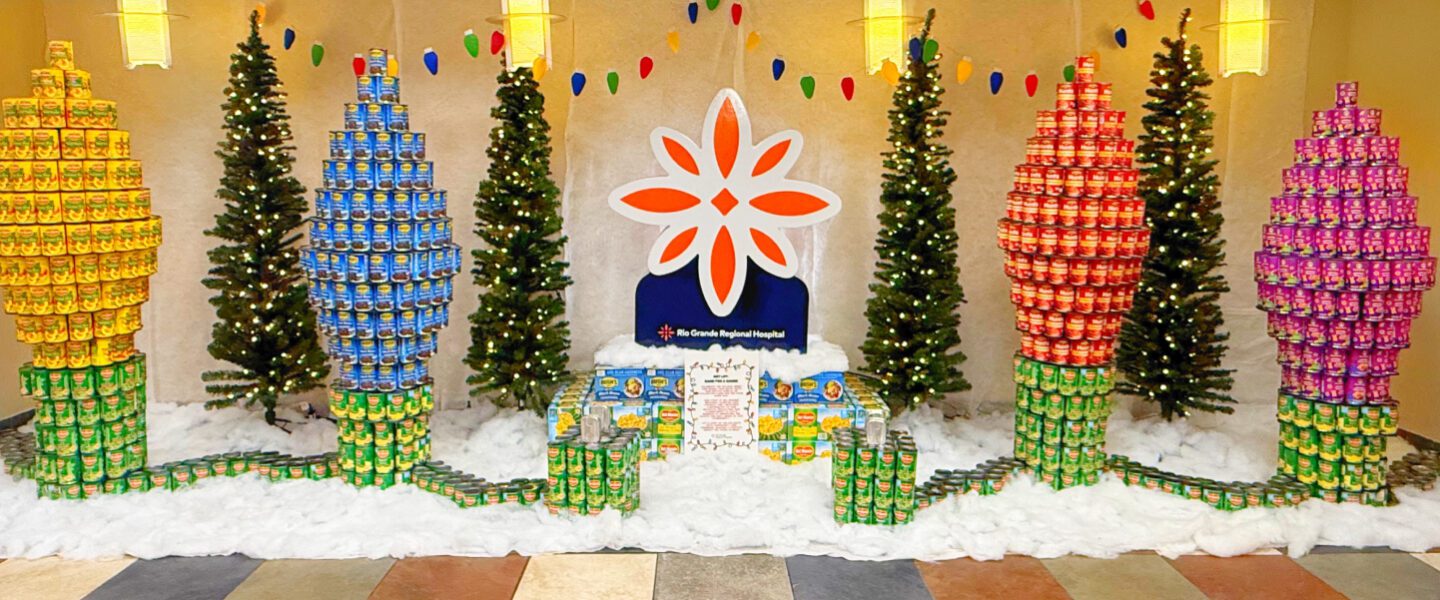
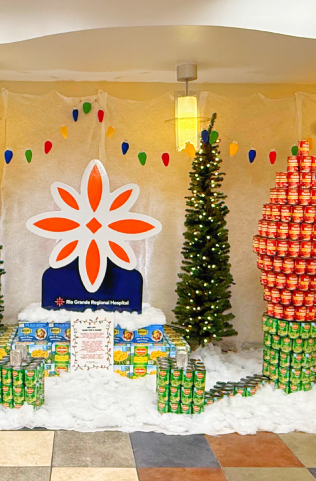
From the beginning, the organizers wanted the food drive to bring colleagues together while keeping community impact at the center. Because hospitals vary significantly in size, organizers looked beyond the amount of food collected when recognizing participation. Instead, colleagues were invited to turn donated food into sculptures — adding creativity and teamwork to an effort addressing a serious community need.
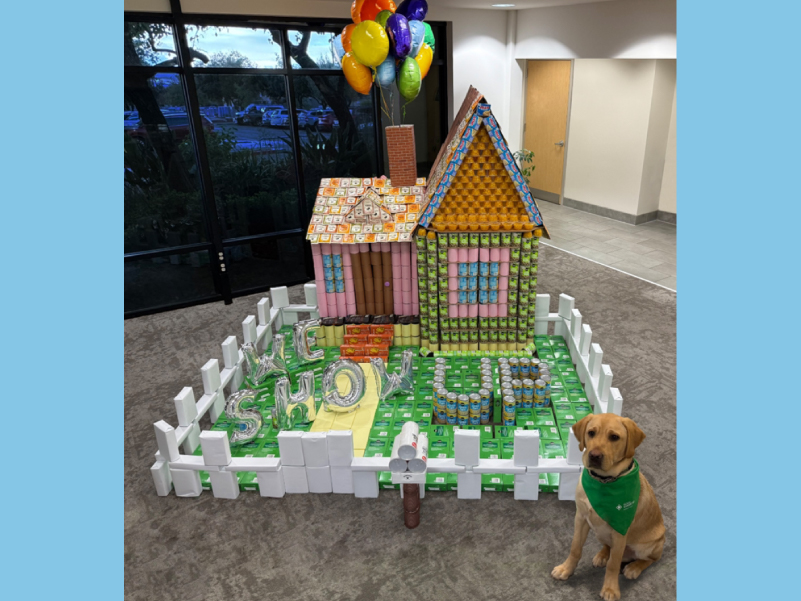
The results have ranged from whimsical to elaborate. Good Samaritan Hospital in San Jose, California, re-created the floating house from the movie Up, complete with a fence. At Eastern Idaho Regional Medical Center, colleagues created a sushi-themed sculpture. In Florida, Ocala Regional Medical Center partnered with Vanguard High School to construct a pumpkin pie display while collecting nearly 6,000 pounds of food for a local emergency services nonprofit. HCA Florida Memorial Hospital in Jacksonville built a 15-foot lighthouse with moving lights circling the top.
“The creativity makes it fun, but the real impact is what happens beyond the sculptures,” Campbell says. “The initiative brings colleagues together around a shared purpose, helping provide nutritious food to individuals and families experiencing food insecurity in their local communities.”
Each division’s winning sculpture earns a grant for a food bank in that hospital’s community, with additional recognition for the top sculptures across the enterprise.
While the initiative traditionally runs from October through November, Campbell says responding to community needs is more important than adhering to a particular calendar.
“We realize there may be times when the need is greater,” she says. Summer can be especially difficult for families as household expenses increase and children may have less access to meals they typically receive during the school year. Divisions have flexibility to respond when their communities need support the most.
“Our goal is to listen to the communities and respond to what they need, when they need it,” Campbell says.
Growing Impact: Rooted in Colleague Service
From 370,000 meals in its first enterprise-wide year, the initiative grew to 878,000 meals in 2022 and reached a record 1.1 million meals in 2025. The total reflects direct hospital and colleague contributions, as well as HCA Healthcare Foundation grant funding.
That growth held even through disruption. Campbell recalls 2024, when Hurricane Helene recovery efforts strained colleagues’ bandwidth for tracking participation, but the desire to support local needs remained strong. This initiative builds on the work our colleagues were already doing in their communities.
Campbell says, “They donate food, provide financial support and volunteer with local food banks and other organizations. Bringing those efforts together helps demonstrate the collective impact our colleagues are making in the communities we serve.”
Investing in Longer-Term Solutions
The annual food drive helps meet an immediate need, while the HCA Healthcare Foundation supports a longer-term approach.
For four consecutive years, food insecurity has been a designated focus area for local grantmaking across each of HCA Healthcare’s 15 divisions.
“We have historically given each division a $25,000 grant each year,” says Sasha Pickett, director of Community Impact.
Community engagement partners work alongside colleagues from HCA Healthcare’s culture and values teams to identify local organizations that are a strong fit. Often, these are smaller nonprofits capable of putting the funding to meaningful use, but not so small that the grant would overwhelm their capacity, Pickett explains.
That approach has connected HCA Healthcare to a wide range of local organizations, from food banks and community gardens to job-training programs tied to food access.
In response to greater community need in 2025, the HCA Healthcare Foundation increased funding opportunities, providing nearly $1.2 million to 50 organizations working to improve access to nutritious food in communities where HCA Healthcare has a presence. Colleagues also supported food security efforts through charitable giving, helping fund 193,632 meals through more than $383,500 in donations and matching gifts. Beyond financial support, Pickett notes that divisions are encouraged to identify volunteer opportunities that give colleagues another way to show up for their communities and help more families access the nutritious food they need for healthier tomorrows.
The food drives and grants take different approaches, but both are grounded in the same idea: healthier communities are built when people and organizations work together to address the needs of their neighbors.
“We know our colleagues are committed to serving at food banks and improving their communities — and all the people who live in their communities,” says Campbell. “This is something we can all support.”
We know our colleagues are committed to serving at food banks and improving their communities — and all the people who live in their communities. This is something we can all support.— Deana Campbell, director of Development and Colleague Community Engagement