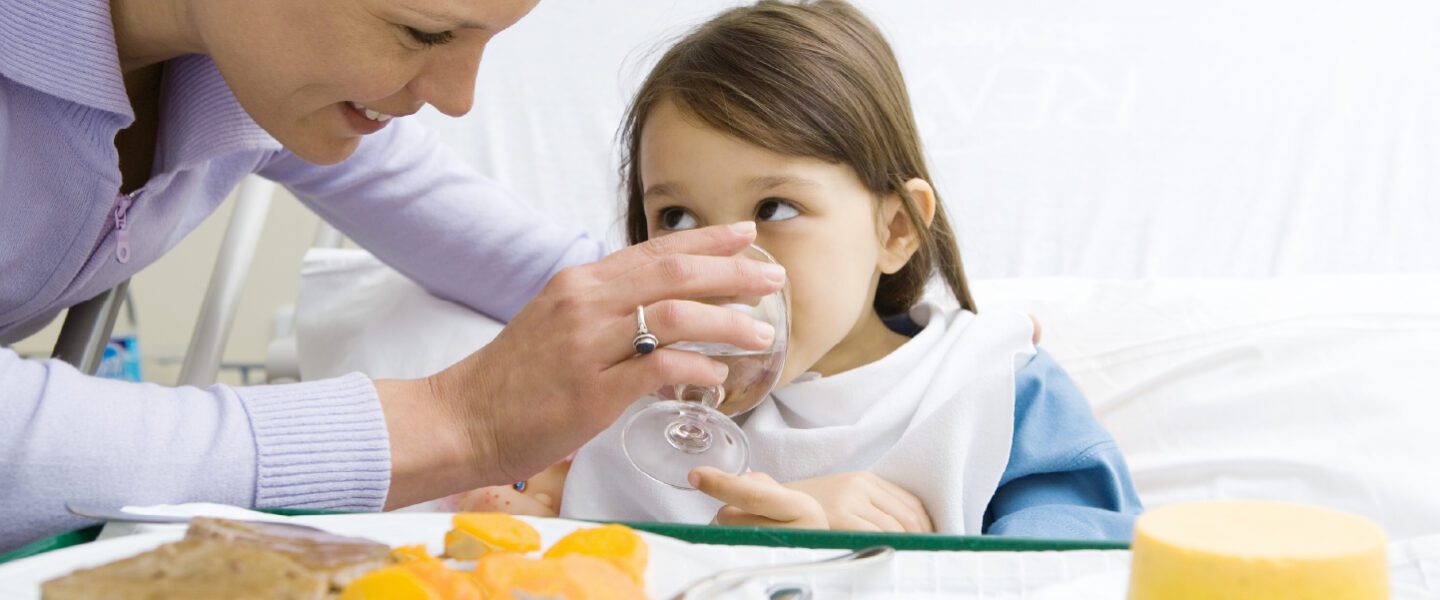
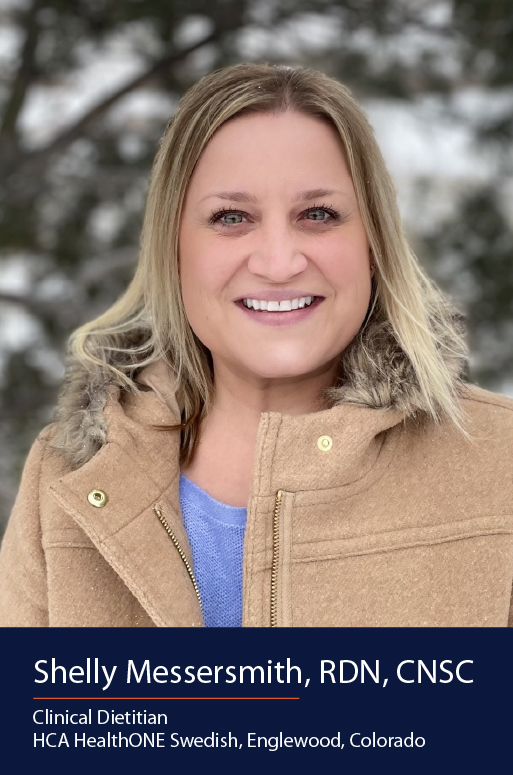
For a hospital dietitian, a typical day is a mix of assessment, planning and real-time problem-solving. “There’s always something exciting and new,” says Messersmith, who works primarily with surgery patients.
Messersmith starts each morning by reviewing patient lists and prioritizing care. From there, she gathers and analyzes a wide range of information, including lab results, medications, recent procedures, weight and nutrition history and current nutritional status. “We have a lot of wonderful resources that guide us and help us conduct research,” she says. “People aren’t cookie-cutter; there are so many factors you have to take into account, from how their kidneys are functioning to a massive wound. It’s like a puzzle, piecing things together.”
As Messersmith develops interventions, she sets SMART goals and works to correct any deficiencies. “I may need to adjust electrolytes based on lab results, and then I’ll send those updates to the pharmacy,” she says.
Throughout the day, Messersmith monitors all patients individually, checking on those receiving tube feedings, adjusting formulas or rates as needed and coordinating with nurses, physicians and families. “Some people may need nutrition focused on higher protein to help that kind of healing,” she says. “I’ll talk to them about their preferences and then make sure it gets delivered.” Every intervention is tailored, tracked and adjusted to ensure patients are receiving exactly what they need to recover.
More than the science of her job, Messersmith values being a part of a patient’s recovery. She recalls a young ICU patient who, after complications, required nutrition delivered through the bloodstream.
“Eventually, we knew that would not be a long-term solution because his gut became more available for use. So we placed a feeding tube and transitioned from bloodstream nutrition to tube feeds,” she says.
In time, the patient was cleared to try swallowing again. “That doesn’t just happen overnight, and it’s often a big struggle for patients,” explains Messersmith. “When someone has been in the hospital for months and is tired, and their family is tired, you’re really just trying to support them so they can eat more and get back to where they were before the injury.”
As her patient healed, he and Messersmith became friends. “I got to know him really well, and it was such a pleasure to see his mood improve. He got stronger, gained weight and eventually was eating and able to go to a rehab facility. It’s exciting when you can see that progress — seeing them smile and feeling like you helped in your own small way. As dietitians, we know we’re contributing by giving patients’ bodies what they need to heal from the inside out.”