Digital Exclusives

Science-Driven Miracles

December 04, 2025

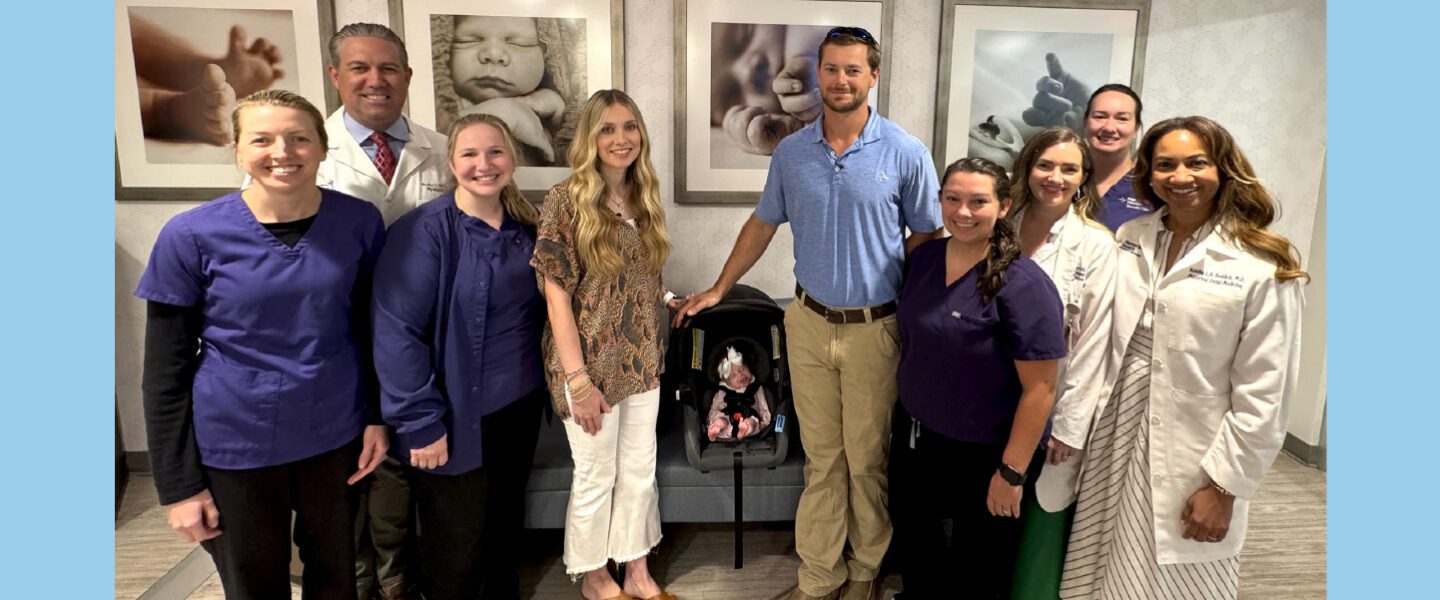
On Aug. 1, 2025, Reagan and Josh Barnard announced the birth of Charlotte, their healthy baby girl who came into this world at Willett Children’s Hospital in Savannah, Georgia. To an outsider, the couple’s declaration sounds like a beautiful result of a routine delivery — two proud parents thrilled to share their happy news. For those in the know, however, baby Charlotte’s arrival was far from ordinary.

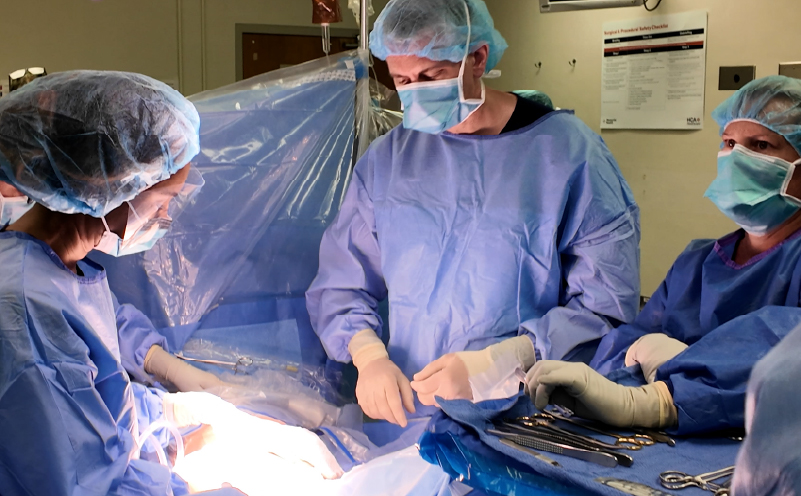
At 5 p.m. the day before Reagan’s cesarean section, a team of 31 medical technicians gathered in an operating room. With a dummy patient, they practiced a surgery they would perform the next day on baby Charlotte — it would be the first time the surgery had been performed in more than a decade.

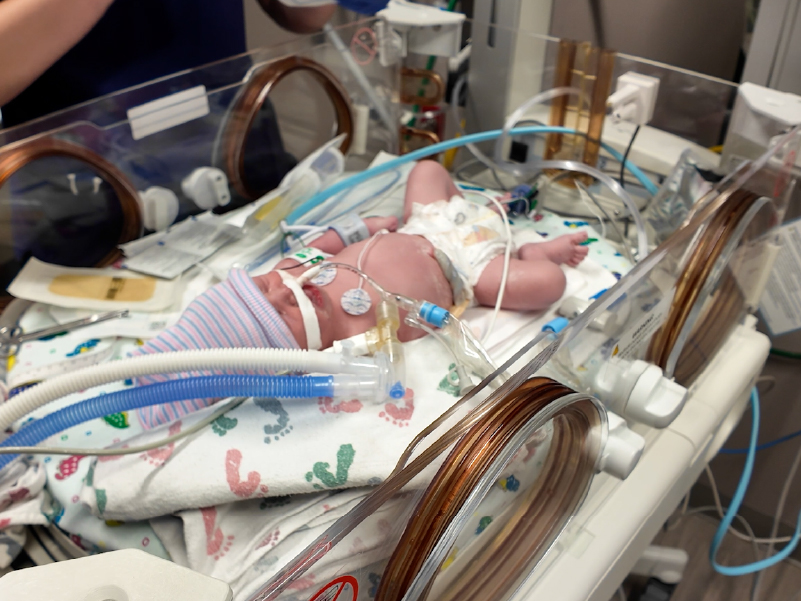
From early ultrasounds, Brad Buckler, MD, and Keisha Reddick, MD, learned that baby Charlotte had a mass on the back of her tongue. As long as she was in utero, Charlotte was getting the oxygen her brain needed from her mother. But after birth, the mass would obstruct her breathing.

By way of a rare C-section-type surgery, known as the EXIT procedure, doctors planned to deliver Charlotte’s top half while her bottom half was still inside her mother’s uterus. That way, they could remove the mass and insert a breathing tube so she could continue to get the blood and oxygen her brain and body needed. Once fully delivered, Charlotte would receive help breathing on her own.

“The day before her delivery, we got everybody in the room who was going to be in the room for the procedure, and we walked through plans A, B and C,” says Dr. Buckler, medical director of Willett’s Level III neonatal intensive care unit. The multidisciplinary team included Dr. Reddick, a prenatal high-risk maternal-fetal medicine physician at Memorial Health, as well as a neonatologist; pediatric ear, nose and throat doctor; pediatric plastic surgeon; pediatric surgeon; anesthesiologist; multiple highly trained nurses; respiratory therapists and more, all prepared to deliver Charlotte safely, and to save her life. “Then we sterilized the room and closed it off so nobody would go in or out the next day until the surgery.”

After Charlotte’s successful delivery, Dr. Buckler made his way to Josh, thrilled to report plan A was a success. “I remember bringing him in to see his daughter for the first time with the tube in place. I told him Charlotte and Mom were doing extremely well. Seeing the relief on his face, the tears of joy that his wife and daughter had been taken care of, was extremely rewarding.”
Tiny babies, big advancements

The success of Charlotte Barnard’s surgery is reflective of the medical advancements throughout HCA Healthcare hospitals.

Dr. Buckler says that a decade ago, 24 weeks would have been the limit of viability; doctors would not have attempted to resuscitate a 22-week-old baby. “That has changed dramatically in the last 10 to 12 years,” he says.

Today, those tiny babies, and babies like Charlotte, are given the chance to live. “Here at Memorial, babies born at 24 weeks now have an 85% chance of surviving and making it out of the hospital.”

HCA Healthcare encompasses the 17 biggest NICUs in the country. Over the years, doctors from these facilities have met monthly to share experiences like Baby Charlotte’s EXIT procedure. “We share best practices for treating micro-preemies so that we’re not having to reinvent the wheel,” Buckler says. “That helps us push the envelope and provide the highest level of care.”

As a result of these meetings, doctors and nurses broadly apply lessons learned, adopting best practices throughout their hospitals. One example: “We found that, because micropreemies are so fragile, they need one-on-one nursing care for the first two to three weeks of their lives,” says Dr. Buckler. “That’s not what we would typically do in a neonatal unit, but HCA Healthcare has been able to show that it is beneficial, so it’s starting to be instituted at all facilities that provide this care.”

Buckler appreciates that day-to-day management in areas like respiratory support or nutrition and IV fluids is not dictated at a corporate level. “Instead, partnering institutions are coming together, providing best practices at a local level and then sharing that nationally.”

Here at Memorial, babies born at 24 weeks now have an 85% chance of surviving and making it out of the hospital.

— Brad Buckler, MD, medical director of Willett’s Level III Neonatal Intensive Care Unit

Infant nourishment

In addition to highly skilled medical care during risky deliveries, HCA Healthcare facilities ensure that, once these babies come into the world, they have the nourishment they need to thrive. Because breast milk provides the utmost nutrition for infants — the American Academy of Pediatrics recommends that babies younger than six months exclusively drink breast milk — HCA Healthcare hospitals make breast milk accessible for mothers and babies who need it.

“Here at Memorial, we have a dedicated milk prep room with big refrigerators where we store donor breast milk or moms’ milk,” Buckler says.

Whereas some new mothers may have an undersupply of milk, others may have more than they need and can either store the excess for later use or donate it to other mothers. “To become a donor, you have to go through a screening process,” Buckler adds.

In the dedicated milk prep room, two to three trained milk prep techs and RNs work to sterilize the milk, and then prepare it in syringes or bottles to feed newborns bedside.

“Mom may bring in 100 milliliters of breast milk [about 1/3 cup], for example, but her baby is only getting 5 milliliters at each feed,” Buckler explains. “The prep techs would put that 5 milliliters in the appropriate syringe to send out to nurses, and we can keep the remainder frozen so we know it’s being utilized in the appropriate period of time.”

Local care

In some cases, Buckler believes parents-to-be don’t fully grasp the importance of seeking hospitals with a high level of neonatal care. “There are not as many Level III or IV NICUs around the country, but getting moms with high-risk pregnancies to these facilities for neonatal care is vitally important,” he says.

While HCA Healthcare hospitals have the ability to transport babies from one institution to another, Buckler says nothing beats what they call a “maternal transfer.” “We would rather transfer the baby inside the mom,” he says.

Buckler adds that HCA Healthcare employees can help spread the word to expecting parents. “Most HCA Healthcare hospitals are at least Level II nurseries, so employees can tell their friends and people in their communities that if they come to HCA Healthcare hospitals, they will get that level of neonatal care. The fact that we don’t have to transport moms and babies hours or states away really tells you how dedicated HCA Healthcare is to maternal and neonatal care.”